

Germany is preparing to change how it taxes Bitcoin and other cryptocurrencies from 2027, potentially ending one of Europe’s most generous long-term holding exemptions as it seeks to raise additional revenue and tighten tax compliance.
Finance Minister Lars Klingbeil said at an April 29 press conference on the 2027 federal budget that the government wants to “tax cryptocurrencies differently,” and key points include an extra 2 billion euros (about $2.3 billion) in revenue from crypto taxation and measures against financial and tax crime.
Under current rules, private crypto gains in Germany are taxable if the assets are sold within one year of acquisition, but are generally tax-free after that period. The exemption has made Germany one of the more favorable European jurisdictions for long-term Bitcoin and crypto holders.
The finance ministry’s 2022 and 2025 guidance confirmed that this one-year “Haltefrist” also applies to coins used in staking and lending, after an earlier plan for 10 years was dropped. Tax advisory firms such as Blockpit describe the rule as a key advantage for German retail investors, especially long-term holders.
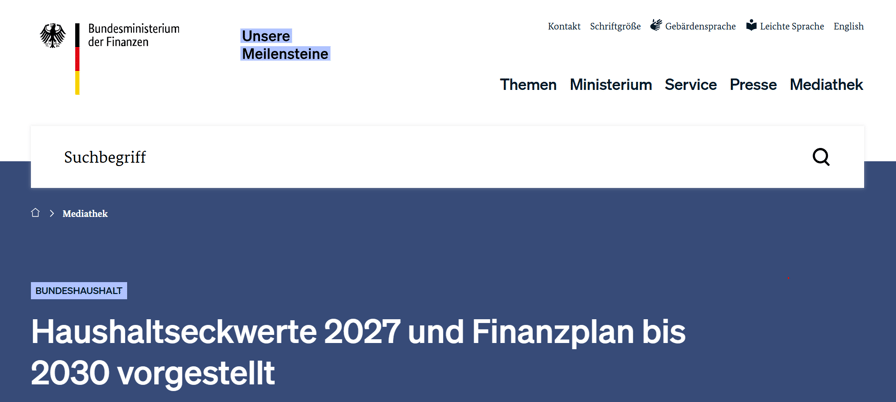
Germany plans to “tax cryptocurrencies differently.” Source: Bundesfinanzministerium
Klingbeil did not explicitly reference the holding period in his April remarks. However, industry groups, including the German Bitcoin Association, say the exemption is the most likely target if the government aims to generate significant revenue from crypto taxation.
Related: Germany‘s central bank president touts stablecoin and CBDC benefits for EU
Bitcoin and crypto tax accountant Robin Thatcher told Cointelegraph that removing the 12-month tax-free disposal would “significantly weaken Germany’s pull as a crypto hub,” and that other jurisdictions “should be copying this policy rather than Germany changing it.”
Cointelegraph reached out to Germany’s Federal Ministry of Finance for comment, but had not received a response by publication.
EU transparency push and policy alignment
The tax debate also comes as Germany prepares for broader crypto reporting under the EU’s DAC8 regime.
Since January, Germany’s implementation of the EU’s DAC8 regime via the Crypto Asset Tax Transparency Act requires crypto asset service providers (CASPs) to report detailed customer transaction data to the Federal Central Tax Office and other EU authorities, dramatically reducing the scope for undeclared crypto trading.
Austria, where Vienna-based crypto broker Bitpanda is headquartered, scrapped its own tax-free holding period for crypto in 2022 and moved to taxing gains as capital income regardless of how long coins are held.

Abolishing Austria’s holding period “extremely stupid idea.” Source: Eric Demuth
Bitpanda co-founder Eric Demuth has since described Austria’s move as “an extremely stupid decision,” arguing in a March 12 X post that it created more bureaucracy and complexity for users and platforms while bringing “hardly any additional benefit” for the state and warning that Germany should not repeat the same mistake.
Related: Bitget taps ex-Bitpanda legal chief Oliver Stauber to build Vienna MiCA hub
Thatcher said the change would put Germany “broadly in line with Austria,” with a 27.5% flat tax, and “not far” from the United Kingdom’s 24% top capital gains tax, causing Germany’s structural competitive edge to “disappear overnight.”
Critics see tax push eroding Germany’s crypto appeal
A spokesperson from Bitpanda told Cointelegraph this is a “critical juncture for Germany’s digital economy.” Any reform should not be “a mere revenue exercise,” they said, especially since the gains to the state would be “negligible” at approximately 0.02% of the federal budget. They added that any new framework “must prioritize market competitiveness and prevent a migration of activity toward unregulated, offshore venues.”
Thatcher said “the packaging matters,” and that the framing shows the motivation is fiscal rather than principled, “sitting inside a 98 billion euro deficit-reduction budget,” alongside cuts to health, pensions and levies on alcohol and tobacco. “Investors and entrepreneurs notice when they are bundled in with so-called sin taxes,” he said, “it shows how the state views the asset class.”
Erald Ghoos, chief executive officer of OKX Europe, told Cointelegraph the plan would hurt Germany’s adoption and competitiveness “in one move,” pushing people toward offshore platforms “without [Markets in Crypto Assets] MiCA obligations.”
He cited Austria as a failed example that created “compliance headaches for minimal revenue gain,” adding that MiCA has “done real work harmonizing regulation,” but that “Europe keeps losing ground” when it comes to taxation.
Magazine: Bitcoin will not hit $1M by 2030, says veteran trader Peter Brandt
Latest News#Germany #weighs #crypto #tax #overhaul #oneyear #holding #rule #threat1778207556
