

Delaware and New Jersey have both advanced legislation to ban cryptocurrency ATMs in what is becoming a growing trend across US states, with lawmakers concerned that the kiosks are overwhelmingly used for scams.
The Delaware House Economic Committee on Tuesday passed House Bill 441 to the full chamber, which would ban owning, installing, or operating a cryptocurrency kiosk.
It followed the New Jersey Senate Commerce Committee’s unanimous vote on Monday to send its bill banning crypto ATMs to the full chamber.
At least three other US states — Indiana, Tennessee and Minnesota — have passed total bans on crypto ATMs in response to their use for scams.
The FBI said in May that it received nearly 13,500 complaints about crypto ATMs in 2025 involving over $388 million in losses, a 23% increase in complaints and a 58% increase in losses from 2024. Over half of the complaints involved people aged over 50, with losses exceeding $302 million.
Cyndie Romer, a representative who sponsored the bill in Delaware, said crypto ATMs “reduce digital currency to a predatory cash grab.”
“Regular crypto traders generally do not use crypto ATMs due to their much higher fees, which can be upwards of 20% of the value of the transaction, versus the 0.4% to 1% in fees for online exchanges,” she added. “There is no reason to support a business structure that enables scammers to extort money from our most vulnerable populations.”
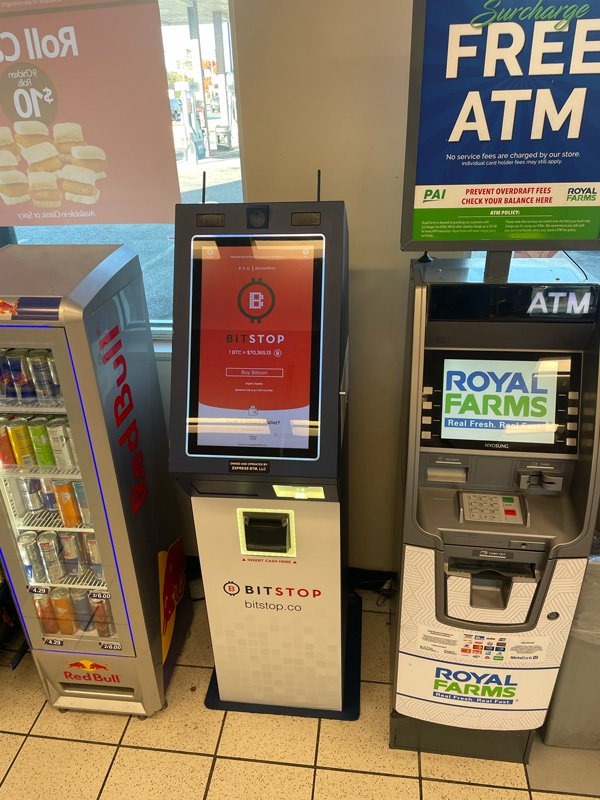
A crypto ATM at a service station in Dover, Delaware’s capital. Source: Coin ATM Radar
Delaware’s bill would also ban fiat-to-crypto sales that “replicate or substitute” crypto ATMs, such as through point-of-sale systems or cashiers. It also mandates that any crypto ATMs must be removed within 90 days after the bill is signed into law.
The bill outlines penalties of up to $10,000 for violations, and if a kiosk is found to be operating, it must refund its fees to all users or pay into a consumer protection fund if users can’t be found.
New Jersey’s bill would similarly ban owning, controlling, installing, managing, selling, or offering to sell a crypto ATM due to “a significant rise in scams associated with their use.”
It outlines penalties of up to $10,000 for a first offense, doubling to $20,000 for subsequent offenses.
Bitcoin ATM operators push back
Indiana became the first US state to ban crypto ATMs with a law signed in March. Tennessee followed with its ban in April, while Minnesota passed a ban in May.
Some US cities have also passed or are weighing ordinances banning crypto ATMs, while some states, including Arizona and California, have capped the value of transactions allowed by crypto ATMs.
Related: Canada proposes crypto ATM ban over scams and money laundering
Bitcoin Depot, once the largest operator of crypto ATMs in the world with over 9,000 kiosks, cited regulatory pressure as a major reason it filed for bankruptcy last month.
However, crypto ATM operators have long claimed they are not at fault for scams through their machines, and many have put in place on-screen scam warnings or self-imposed transaction limits to curb illicit transactions.
Bitcoin Depot had told an ICIJ investigation on crypto scams in December that it “cannot be held liable for the criminal acts of third-party scammers” and said it had “robust warnings and safeguards” on its machines and during transactions.
Magazine: When privacy and AML laws conflict: Crypto projects’ impossible choice
Latest News#Delaware #Jersey #advance #bills #banning #crypto #ATMs1781151655
