

Key takeaways:
- The Bitcoin funding rate climbed to 7%, showing confidence, but spot ETF outflows keep a $70,000 breakout on hold for now.
- Strong order-book bids and lower oil prices helped, but weakness across stocks, bonds, and gold signals a preference for cash.
Bitcoin (BTC) flirted with the $65,500 level on Monday after US Vice President JD Vance said that the Strait of Hormuz remains open amid “encouraging progress” on talks with the Iranian delegation in Switzerland. Bitcoin traders showed signs of optimism through growing demand for bullish leveraged positions, raising the question of whether $70,000 is next.
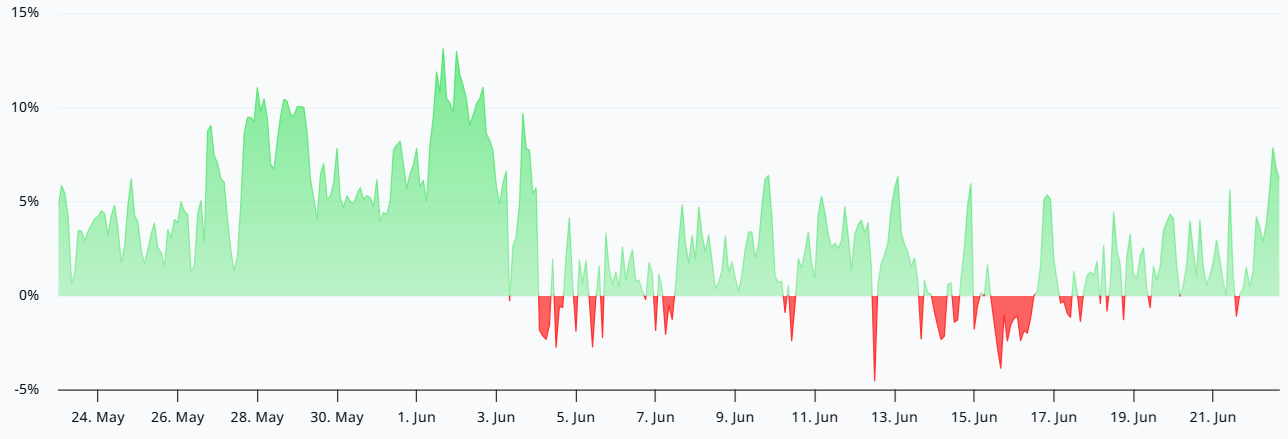
Bitcoin perpetual futures annualized funding rate. Source: Laevitas
The Bitcoin perpetual futures annualized funding rate jumped to 7% on Monday, its highest level in nearly three weeks. Although still within the neutral 6%-12% range, the indicator reflects growing confidence among bulls. Part of the optimism likely stemmed from Brent crude oil prices declining to $77.50, their lowest level since March.
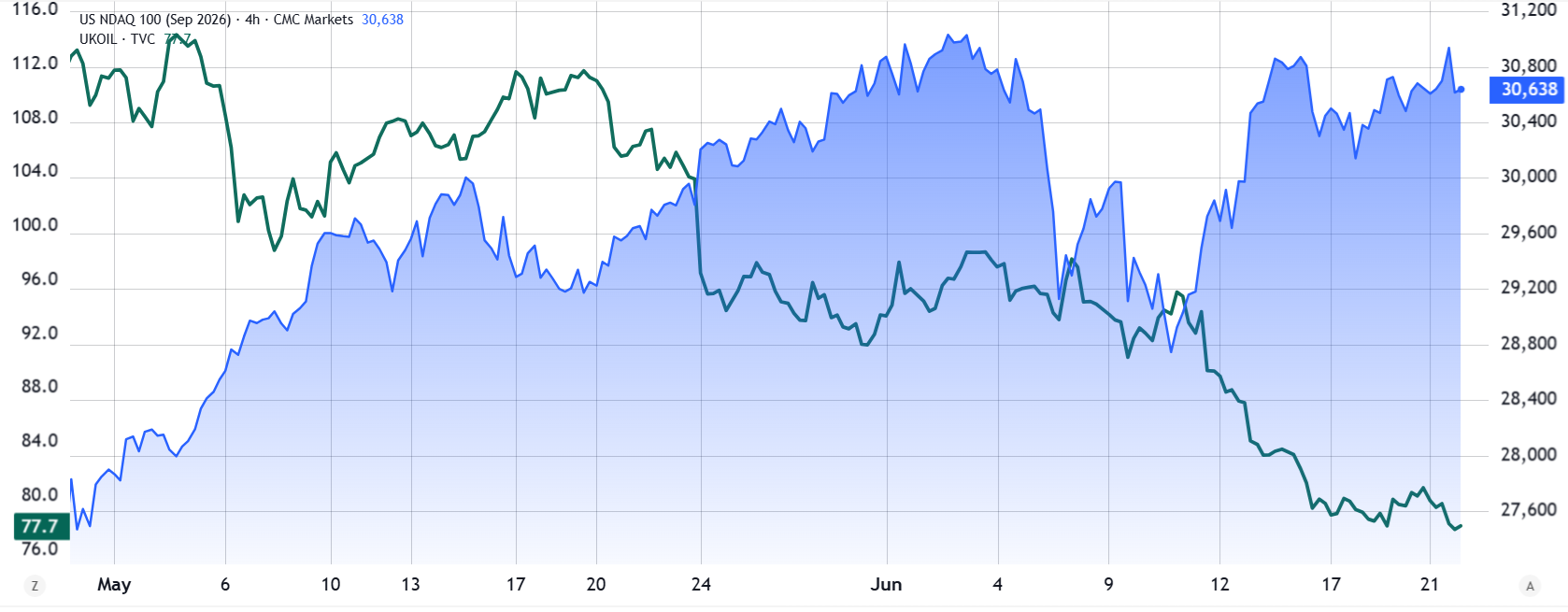
Crude Brent oil, USD (left) vs. Nasdaq 100 futures (right). Source: TradingView
The Nasdaq 100 Index posted a modest 1% decline as artificial intelligence stocks weakened. SpaceX (SPCX US) shares dropped 13% after the company announced plans to raise debt despite holding more than $100 billion in cash. Investors fear the sector will need higher investments for longer before turning profitable.
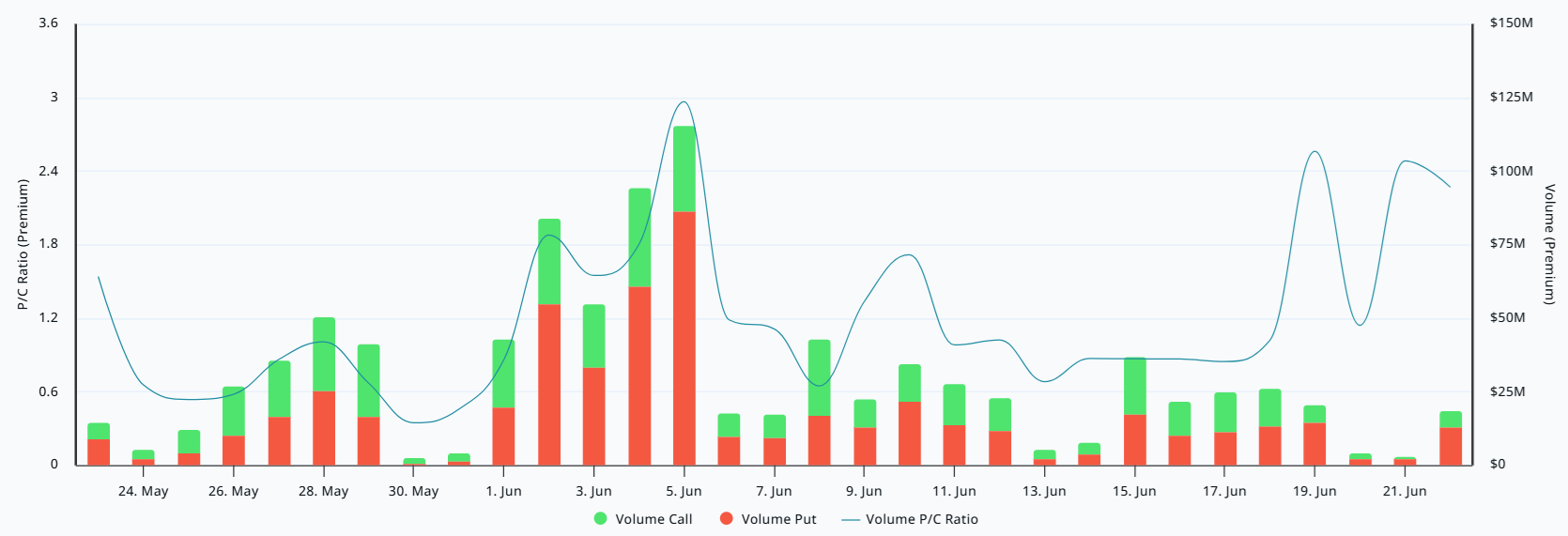
Bitcoin options premium put-to-call ratio at Deribit, USD. Source: Laevitas
Demand for put (sell) options outpaced call (buy) instruments by over two times on Monday, signaling stronger demand for downside price protection. The indicator has leaned toward bearish strategies since Friday, reversing the trend from the prior week.
Strategy eases concerns, but stocks and bonds signal increased risk
Part of traders’ concerns stemmed from weakness in Strategy’s (STRC US) valuation. Shares of Strategy traded 13% below the $64.1 billion cost to acquire BTC 847,363. Despite holding a comfortable $6.75 billion in debt, investors feared the company would need to sell reserves. Those concerns eased somewhat as Strategy announced a $300 billion additional cash position.
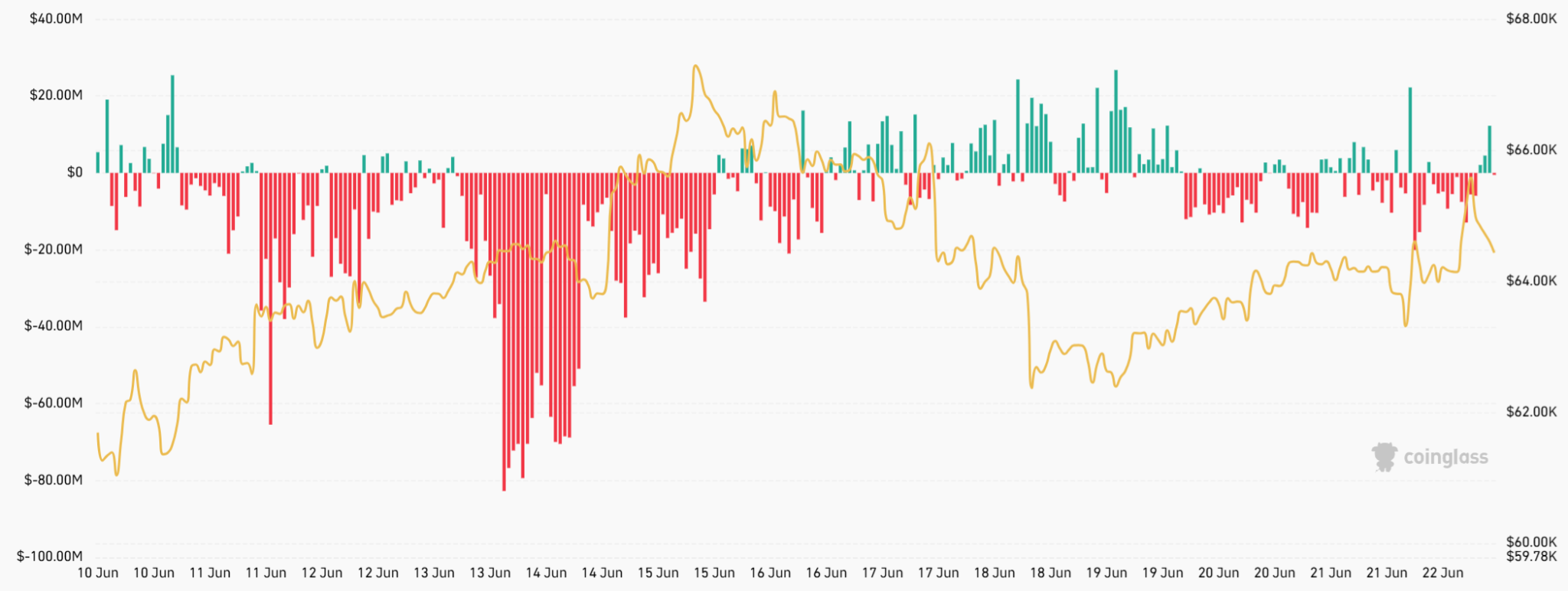
Aggregated Bitcoin orderbook 1% liquidity delta, USD. Source: CoinGlass
Bids on major exchanges’ Bitcoin order books exceeded offers by $12 million on Monday, reversing the weekend trend. Consequently, Bitcoin’s failure to hold the $65,000 level should not signal weakness, especially since gold traded down 0.9% on Monday while investors sold US government bonds.
Related: Bitcoin tipped for $66K top as trader flags ‘suspicious’ BTC price gains
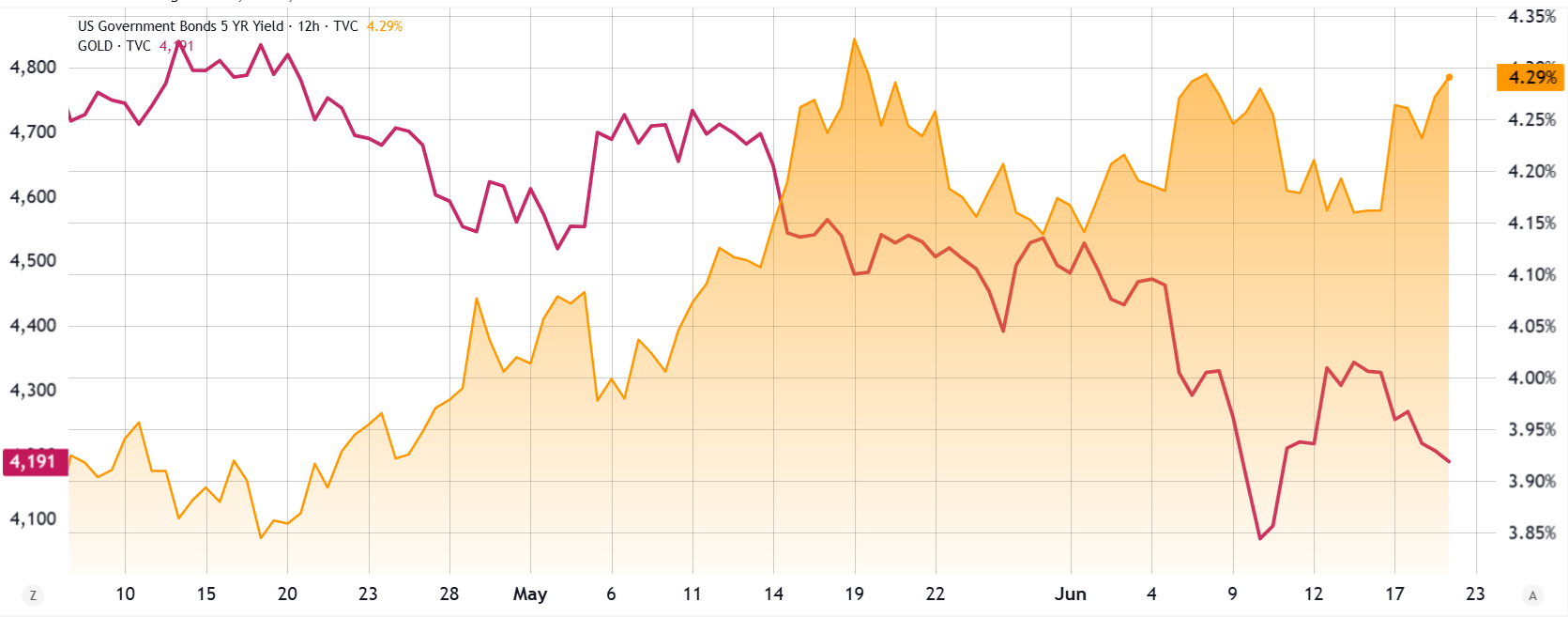
Gold/USD (left) vs. US 5-year Treasury yield (right). Source: TradingView
Higher yields on US Treasuries signal that investors demanded higher returns to hold those bonds, whether driven by inflation or by the anticipation of dilution from rising US government debt levels. The simultaneous weak performance across stocks, bonds, and gold points to a preference for cash positions, creating a cautious backdrop for Bitcoin.
Weak demand for US-listed Bitcoin exchange-traded funds (ETFs) continues to weigh on investor sentiment after six weeks of outflows. Bitcoin spot ETFs saw $228 million in net outflows the prior week, according to CoinGlass data. Consequently, the odds of a short-term Bitcoin rally to $70,000 look limited.
Markets,Bitcoin Price,Cryptocurrencies,Bitcoin Options,Leverage,Market Analysis#Bitcoin #funding #rate #hits #2week #high #70K1782167265
